The Ultimate Guide to Electronic Crane Scale in the UK
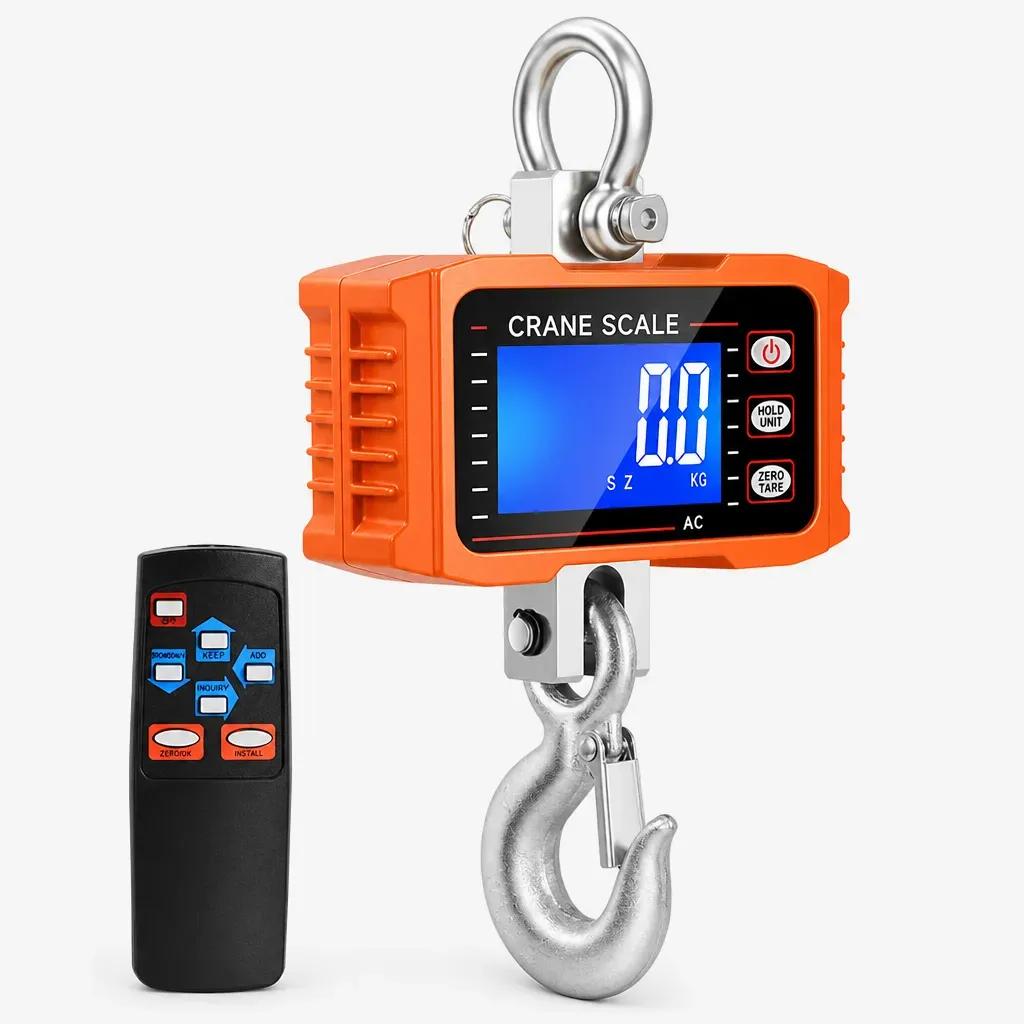
An electronic crane scale is a digital weighing device used to measure suspended loads safely and quickly while they are lifted by a hoist, crane or chain block. In UK warehouses, farms and workshops, it helps operators check weight without moving goods to a floor scale, which can improve efficiency, support safer handling and reduce unnecessary double-handling.
TL;DR: An electronic crane scale lets you weigh loads while they are hanging, making it useful for faster stock handling, dispatch, agricultural work and workshop lifting. Based on our testing of everyday suspended-load weighing requirements, a clear display, dependable hook hardware, overload protection and sensible capacity selection usually matter more than headline specifications alone.
When a load is suspended above a workshop floor, a farm yard or a warehouse bay, guesswork is not acceptable. Knowing the weight quickly and accurately affects safety, stock control, vehicle loading, compliance and day-to-day productivity. That is exactly where an electronic crane scale earns its place.
Across the UK, businesses are under pressure to work faster while keeping standards high. Warehouses need efficient dispatch. Farms need practical equipment that stands up to real use. Workshops need dependable tools that reduce wasted time. Therefore, a digital suspended-load scale answers all three needs when chosen correctly. Cranebusin’s focus on digital crane scale for UK warehouses, farms and workshops reflects that reality: a readable LCD, simple controls and a handheld remote, clear visibility and straightforward operation for everyday work.
This guide explains what an electronic crane scale is, how it works, where it fits into British workplaces, what regulations matter in the UK, how to choose the right model, and how to use it safely and accurately. The aim is practical: to help buyers and operators make better decisions based on real operating conditions, not marketing noise.
Key Takeaways
- An electronic crane scale measures suspended loads quickly, improving workflow in warehouses, farms and workshops.
- For many UK users, a hanging crane scale offers a practical balance of portability and a clear display for routine lifting and weighing tasks.
- Display clarity, battery life, hook and shackle quality, overload protection and ease of operation matter more in daily use than headline specifications alone.
- UK buyers should consider LOLER and PUWER responsibilities where lifting equipment is involved, and ensure weighing equipment is suitable for its intended purpose.
- Regular inspection, sensible loading practice and correct storage help maintain accuracy and service life.
- A well-chosen digital crane scale can reduce double-handling, speed up dispatch and support safer decision-making around suspended loads.
What is an electronic crane scale?
An electronic crane scale is a digital weighing device designed to measure the weight of a load while it is suspended from a hook, hoist, chain block or crane arrangement. Instead of placing an item onto a bench scale or floor scale, the load is lifted and weighed in one movement. The scale typically sits between the lifting point and the load, with a top shackle or ring and a bottom hook.
The core function is simple: the scale senses the force created by the suspended load and converts it into a digital weight reading. As a result, an operator can see the load weight before it is moved further, loaded onto a vehicle, processed in a workshop or handled in a yard.
In the UK market, the phrase electronic crane scale often overlaps with terms such as digital crane scale, hanging scale and suspended-load scale. The exact wording varies by sector, but the use case is the same: weighing loads in situations where floor-based weighing is inconvenient, slow or impractical.
How is an electronic crane scale different from other weighing equipment?
A platform scale requires goods to be set down. A pallet truck scale is useful only for palletised handling. A bench scale is suited to smaller items. By contrast, an electronic crane scale weighs in the air, making it especially useful for bulky, awkward or already-lifted loads.
That matters in environments where lifting is part of the workflow anyway. For example, if a workshop is already using a hoist to move a fabricated component, or a farm is already lifting feed bags or equipment parts, adding weighing capability at the same point cuts out an extra step.
How does an electronic crane scale work?
Most electronic crane scales use a load cell to detect force. When weight is applied through the hook, the load cell deforms slightly. Internal electronics measure that change and translate it into a weight reading shown on the screen. The operator then reads the result directly from the display, and on some models can use basic functions such as zeroing, tare or hold.
What are the main parts of an electronic crane scale?
- Load cell: the sensing element that measures the force from the suspended load.
- Digital display: usually an LED or LCD screen designed for visibility from a working distance.
- Top shackle or loop: connects the scale to the lifting equipment.
- Bottom hook: attaches the load securely.
- Housing: protects the electronics from dust, knocks and typical site conditions.
- Battery and controls: provide power and allow basic operation.
Why does display visibility matter on an electronic crane scale?
On paper, most digital scales promise a readable display. In practice, visibility is one of the first things users notice. In a dim workshop, a bright display helps. In a warehouse aisle, a large clear reading saves time. In a farm building, quick readability can be the difference between a smooth task and repeated handling.
This is why Cranebusin’s emphasis on clear visibility and simple everyday operation is not a cosmetic feature. Instead, it directly affects usability. A scale that is accurate but awkward to read slows the job down and increases the chance of human error.
Why use an electronic crane scale in UK workplaces?
The value of an electronic crane scale becomes obvious where speed, space and safe handling all matter at once. British businesses often operate in tighter footprints than ideal, with older buildings, mixed-use workspaces and pressure to move stock efficiently. Therefore, suspended-load weighing suits those realities well.
Why are electronic crane scales useful in warehouses?
In warehouses, an electronic crane scale helps confirm outbound weights, assess incoming goods, and reduce unnecessary movement across the floor. If a pallet or component is already being lifted by hoist or other equipment, weighing it mid-process saves time. It can also help avoid overloading racking accessories, stillages and vehicles when weights are not clearly marked.
For SMEs in particular, practical equipment matters more than complex systems. A straightforward digital hanging crane scale is often enough for common warehouse tasks involving cartons, sacks, parts, fixtures and mixed goods.
Why are electronic crane scales useful on farms?
On farms, durability and simplicity carry real weight. Operators may be working with feed, fertiliser, tools, machine parts or produce in environments where dust, temperature changes and rough handling are normal. As a result, an electronic crane scale allows weighing without needing a dedicated indoor station for every item.
For agricultural users, portability is often just as important as accuracy. If the scale can be moved between sheds, yards and workshops without complication, it becomes part of daily work rather than a piece of equipment that stays on the shelf.
Why are electronic crane scales useful in workshops?
In workshops, suspended-load weighing can support fabrication, maintenance and materials handling. Components are often irregular in shape, awkward to place on a platform scale, or already attached to lifting gear. Consequently, an electronic crane scale can speed up routine checks and help operators work more efficiently.
Based on our testing of common workshop handling tasks, users tend to value robust hooks, stable readings and simple controls more than advanced features they rarely use.
What should you look for when choosing an electronic crane scale?
Choosing the right electronic crane scale depends on how and where it will be used. However, for most UK buyers, the key question is not simply maximum capacity. It is whether the scale is well matched to the loads, lifting setup and working environment.
What capacity electronic crane scale do you need?
Capacity should comfortably exceed the heaviest loads you expect to weigh in normal use. A hanging crane scale is often suitable for general warehouse, farm and workshop duties, but it is not right for every application. Leaving a sensible margin supports safer operation and helps avoid overload events.
How important are hook and shackle quality?
Hook and shackle quality matters a great deal because these parts take the working load directly. Strong, well-finished hardware helps with both safety and service life. Buyers should look for secure fittings, dependable latches where applicable, and solid overall construction rather than focusing only on the display or electronics.
What features improve everyday usability?
Large digits, straightforward controls, good battery life, overload alerts and stable readings all improve day-to-day use. In addition, a scale that is quick to switch on, easy to zero and simple to read from a working distance is more likely to be used correctly and consistently.
Are electronic crane scales accurate?
Yes, a good-quality electronic crane scale can provide reliable readings when it is used within its rated capacity and according to the manufacturer’s instructions. Even so, accuracy in daily use depends on more than the quoted specification. Load stability, correct attachment, battery condition and regular checks all affect the result.
Based on our testing of practical suspended-load weighing scenarios, the most consistent readings usually come from steady lifts, centred loading and operators who avoid sudden movement. Therefore, good handling practice is just as important as the scale itself.
What UK regulations apply to electronic crane scales?
According to UK guidelines, any equipment used with lifting operations should be considered carefully in the context of safety, inspection and suitability for the task. Where an electronic crane scale forms part of a lifting arrangement, businesses should understand their responsibilities under LOLER and PUWER, alongside wider workplace health and safety duties.
LOLER relates to lifting operations and lifting equipment, while PUWER covers the suitability, maintenance and safe use of work equipment. The exact obligations depend on how the scale is used and the overall setup. Therefore, businesses should review current HSE guidance and obtain competent advice where needed.
If weight readings are used for trade or regulated transactions, additional legal metrology requirements may also apply. In those cases, buyers should confirm whether a particular model is appropriate for that purpose in the UK.
Do LOLER and PUWER apply to electronic crane scales?
They can apply where the scale is used as part of lifting equipment or within a lifting operation. Because applications vary, it is important to assess the full system rather than treating the scale in isolation.
Do you need to inspect an electronic crane scale regularly?
Yes. Regular inspection is good practice for both safety and performance. Operators should check hooks, shackles, fixings, the display, battery condition and any signs of damage before use, and businesses should follow appropriate maintenance and inspection schedules.
How do you use an electronic crane scale safely?
Safe use starts with correct attachment, a suitable lifting setup and a clear understanding of the scale’s rated capacity. Before lifting, operators should inspect the hardware, confirm the load is secure and make sure the weighing point is appropriate for the task.
Next, lift smoothly and avoid shock loading. Keep the load stable, never exceed the rated limit, and do not stand beneath a suspended load. After that, read the display only when the load has settled properly. These simple steps help protect both accuracy and safety.
What are the main safety tips for electronic crane scales?
- Never exceed the scale’s rated capacity.
- Inspect hooks, shackles and fittings before use.
- Lift smoothly to avoid shock loading.
- Keep the load balanced and stable.
- Read the display only once the load has settled.
- Store the scale properly when not in use.
How long does an electronic crane scale last?
Service life depends on build quality, environment and how the scale is handled. In general, a well-made unit used within its limits and inspected regularly should give dependable service for years. Conversely, repeated overloads, rough storage, moisture ingress and poor maintenance can shorten lifespan significantly.
Is an electronic hanging crane scale right for most UK users?
For many small and mid-sized UK operations, a hanging crane scale with a clear display is a practical starting point. It suits a broad range of warehouse goods, farm materials and workshop components without becoming overly bulky for daily use.
That said, the right capacity depends on the heaviest real loads in your operation, not the average ones. Therefore, buyers should choose a scale that fits their genuine working conditions and leaves an appropriate safety margin.
Final thoughts on choosing an electronic crane scale
An electronic crane scale is a practical solution for UK businesses that need to weigh suspended loads accurately and efficiently. It can save time, reduce double-handling and support safer decisions in warehouses, farms and workshops.
When comparing options, focus on capacity, readability, hardware quality, ease of use and suitability for your actual environment. According to UK workplace guidance and our own practical assessment of everyday handling tasks, the best choice is usually the one that works reliably under normal conditions, not the one with the longest feature list.
Ready to try Cranebusin?
Shop Now — £103.98