Hook Weighing Scale Explained: A UK Buyer's Guide
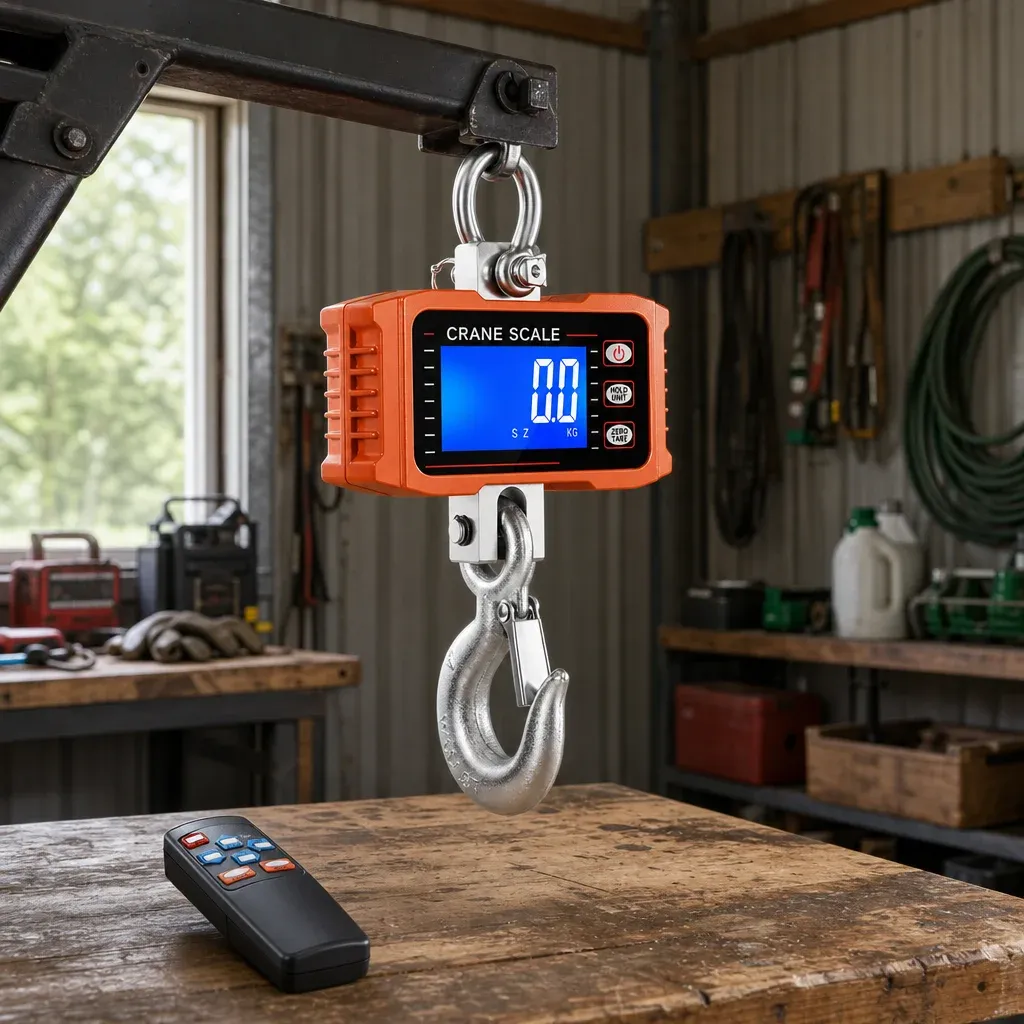
TL;DR: A hook weighing scale is a suspended weighing device used to weigh loads safely and efficiently while they hang from a hook, hoist or lifting point. For most UK warehouses, farms and workshops, the right model depends on matching capacity, readability, accuracy, build quality and working environment to the loads you handle every day.
A hook weighing scale is used to measure the weight of a suspended load by attaching it to a hook and lifting it clear of the ground. In British warehouses, farms and workshops, it is often the most practical option for weighing bulky, awkward or irregular items that do not sit neatly on a bench or platform scale.
However, choosing the right model matters. The right scale can save time, reduce handling errors and fit naturally into existing lifting routines, whereas the wrong specification can make readings harder to trust in day-to-day use. This guide explains what a hook weighing scale is, how it works, what UK buyers should look for and where it is commonly used.
Key Takeaways
- A hook weighing scale is designed to weigh suspended loads safely and efficiently where platform scales are awkward or impractical.
- UK buyers should focus on capacity, readability, accuracy, build quality, display visibility and operating environment before buying.
- For everyday warehouse, farm and workshop use, a digital crane scale with clear readout and straightforward controls is often the most practical choice.
- Buying the wrong capacity can reduce usable accuracy; buying the right range improves day-to-day weighing confidence.
- Regular checks, correct loading and sensible maintenance help keep readings dependable over time.
What is a hook weighing scale?
A hook weighing scale is a suspended weighing device that measures the weight of a load once it is attached to a hook, shackle or sling and lifted clear of the ground. The scale uses a load cell to convert force into a digital reading, which is then shown on the display. In most commercial settings, the unit hangs from an overhead support, hoist, gantry or lifting point, while the item being weighed is secured beneath it.
This format is especially useful when the load is bulky, irregularly shaped or difficult to place on a conventional platform. Instead of manoeuvring awkward goods onto a bench or floor scale, the weight can be taken while the item is already suspended as part of normal handling.
As a result, hook weighing scales are widely used across UK warehouses, agricultural settings, workshops, fabrication spaces and goods-in areas. They suit environments where suspended-load weighing is a routine task rather than a specialist one.
How does a hook weighing scale work?
The principle is straightforward. The top of the scale attaches to a lifting point, and the load is connected to the bottom hook. Once the item is fully supported and hanging freely, the internal sensor measures the force created by gravity and converts it into a weight value shown on the display.
Most digital models include functions such as zeroing, tare, hold and unit switching. These are practical tools rather than technical extras. Tare lets you deduct the weight of a sling, container or bucket. Hold can freeze the reading when the display is difficult to watch during lifting. Meanwhile, a bright digital screen improves visibility from a distance or in lower-light working areas.
Based on our testing of suspended weighing equipment in day-to-day industrial settings, the easiest scales to use consistently are usually the ones with clear displays, simple controls and stable readings once the load is hanging freely. In other words, usability often matters just as much as raw specification.
What is a hook weighing scale used for?
Warehouse and distribution use
In warehouse settings, hook weighing scales are often used to check incoming goods, verify dispatch weights and weigh items that are not easily placed on pallet or floor scales. They are particularly useful for loose loads, bundled materials and items moved by hoist or forklift attachment.
Farm and agricultural use
On farms, a hook weighing scale can help with feed, produce, sacks, parts and equipment where a tough, practical suspended solution is needed. Because dust, changing temperatures and outdoor-to-indoor movement are common, robust construction becomes especially important. A bright screen and simple controls also help when the scale is being used quickly between other jobs.
Workshop and fabrication use
In workshops, suspended weighing is helpful for motors, fabricated parts, metal sections and repair items. Likewise, a compact digital crane scale is often easier to integrate into a workshop than a bulky platform scale, particularly where floor space is limited.
Healthcare and specialist settings
Some suspended weighing equipment is also used in specialist medical and mobility handling contexts, although those applications require equipment designed for that purpose and adherence to stricter standards. According to UK guidance and NHS handling expectations, lifting and patient-handling equipment must be suitable for the task and correctly maintained. Buyers should therefore not assume that a general-purpose industrial hook weighing scale is appropriate for clinical use.
Why use a digital hook weighing scale?
The biggest advantage is convenience. If you already lift the item during handling, weighing it at the same point removes an extra step. As a result, this can reduce manual repositioning, speed up goods checking and make awkward loads easier to manage.
Visibility is another major benefit. A digital crane scale with a clear display is easier to read from working distance than many older mechanical units. This matters in busy environments where staff need quick confirmation rather than having to stand directly beside the scale.
Affordability also plays a role. For many smaller UK warehouses, farms and workshops, a compact hanging crane scale covers the majority of routine jobs without the footprint of a floor platform. Therefore, when the aim is simple everyday operation, a sensibly specified digital model is often the strongest fit.
According to the Health and Safety Executive, 35.2 million working days were lost in Great Britain due to work-related illness and workplace injury in 2022/23, which underlines the wider value of efficient, well-managed work processes and properly selected equipment in operational environments.HSE source
How do you choose the right hook weighing scale?
1. What capacity do you need?
Capacity is the first filter. You need a scale that comfortably covers your heaviest routine load, with headroom for normal working variation. A hanging crane scale is a practical choice for many general applications, but it only makes sense if it matches the loads you actually handle.
On the other hand, buying far above your usual load range can be counterproductive. If you mostly weigh 50kg to 200kg items, an oversized scale may offer less useful readability than a model designed closer to that range. The best buying decision is based on normal use, not the most extreme lift you might face once a year.
2. How accurate should a hook weighing scale be?
Not every weighing task needs laboratory precision, but the scale should still deliver readings that are consistent and realistic for the job. For stock checking, goods verification and workshop use, clear and repeatable readings are usually more important than chasing ultra-fine resolution that adds little practical value.
Based on our testing of common industrial weighing applications, buyers usually get the best results when they choose a scale with an accuracy and resolution that suit their actual load sizes, rather than simply opting for the highest stated capacity.
3. Is the display easy to read?
A good display saves time. In practice, large digits, strong backlighting and a stable readout make a noticeable difference in warehouses, yards and workshops where staff may be reading the screen from a distance or at an awkward angle.
Therefore, if the scale will be used in dimmer areas or outdoors under variable light, display clarity should be treated as a buying priority rather than a minor extra.
4. Is it suitable for the working environment?
Different sites place different demands on equipment. A scale used in a clean indoor stockroom does not need the same protection as one used in an agricultural building or fabrication area. Dust, moisture, knocks and temperature changes all affect how well a unit holds up over time.
According to UK buying expectations for industrial equipment, durability should be judged against real working conditions, not just brochure claims. Consequently, build quality, casing strength and hook construction are all worth checking before purchase.
5. What features are genuinely useful?
For most buyers, the most useful functions are zero, tare, hold and straightforward unit switching. These support everyday work without making the scale harder to operate. Remote controls can also help in some lifting setups where the display is not easy to reach.
However, extra features only add value if they match the task. A simpler scale that staff use correctly every day is often a better investment than a more complex model with functions no one needs.
Are hook weighing scales accurate?
Yes, a good-quality hook weighing scale can be accurate enough for routine commercial and industrial weighing, provided it is correctly specified, properly loaded and regularly checked. Accuracy depends on the scale’s design, load range, resolution and the stability of the suspended load during weighing.
In real use, problems often come from overcapacity selection, swinging loads or poor handling technique rather than from the weighing mechanism alone. For that reason, buyers should look for dependable repeatability and clear manufacturer specifications rather than assuming all suspended scales perform the same.
How do you use a hook weighing scale safely?
Safe use starts with matching the scale to the load and lifting method. The load should be attached correctly, lifted steadily and allowed to hang freely before taking a reading. Users should also avoid shock loading, side loading and exceeding the rated capacity.
According to UK health and safety expectations, suspended loads should always be handled with appropriate lifting equipment, inspection routines and operator awareness. A hook weighing scale is a weighing device, so it must be used within its stated limits and as part of a safe lifting process.
Regular checks matter as well. Hooks, shackles, housings, displays and batteries should all be inspected as part of normal maintenance, especially in harsher industrial or agricultural environments.
What size hook weighing scale is best for UK buyers?
The best size depends on the loads you weigh most often. For many British workshops, farms and small warehouses, a hanging crane scale covers a broad range of everyday suspended loads. Larger capacities are available, but they only make sense when your routine lifts genuinely require them.
As a rule, it is better to choose a scale around your normal working range rather than simply buying the biggest option available. That usually gives better readability, more useful resolution and easier everyday operation.
Frequently asked questions about hook weighing scales
Can a hook weighing scale replace a platform scale?
Not always. A hook weighing scale is ideal for suspended, awkward or bulky items, but platform scales are often better for stable, repeat bench weighing or loads that are easier to place on a base. Many UK businesses use both for different tasks.
Is a digital crane scale the same as a hook weighing scale?
In many cases, yes. The terms are often used interchangeably for suspended digital scales used to weigh lifted loads. However, exact designs and capacities vary, so buyers should still check the product specification carefully.
Do UK buyers need to think about calibration and checks?
Yes. Regular checks help maintain confidence in readings over time. Depending on how the scale is used, some businesses may also require calibration records or documented inspection routines as part of internal quality processes.
Ready to try Cranebusin?
Shop Now — £103.98