Heavy Duty Hanging Scale Explained: A UK Buyer's Guide
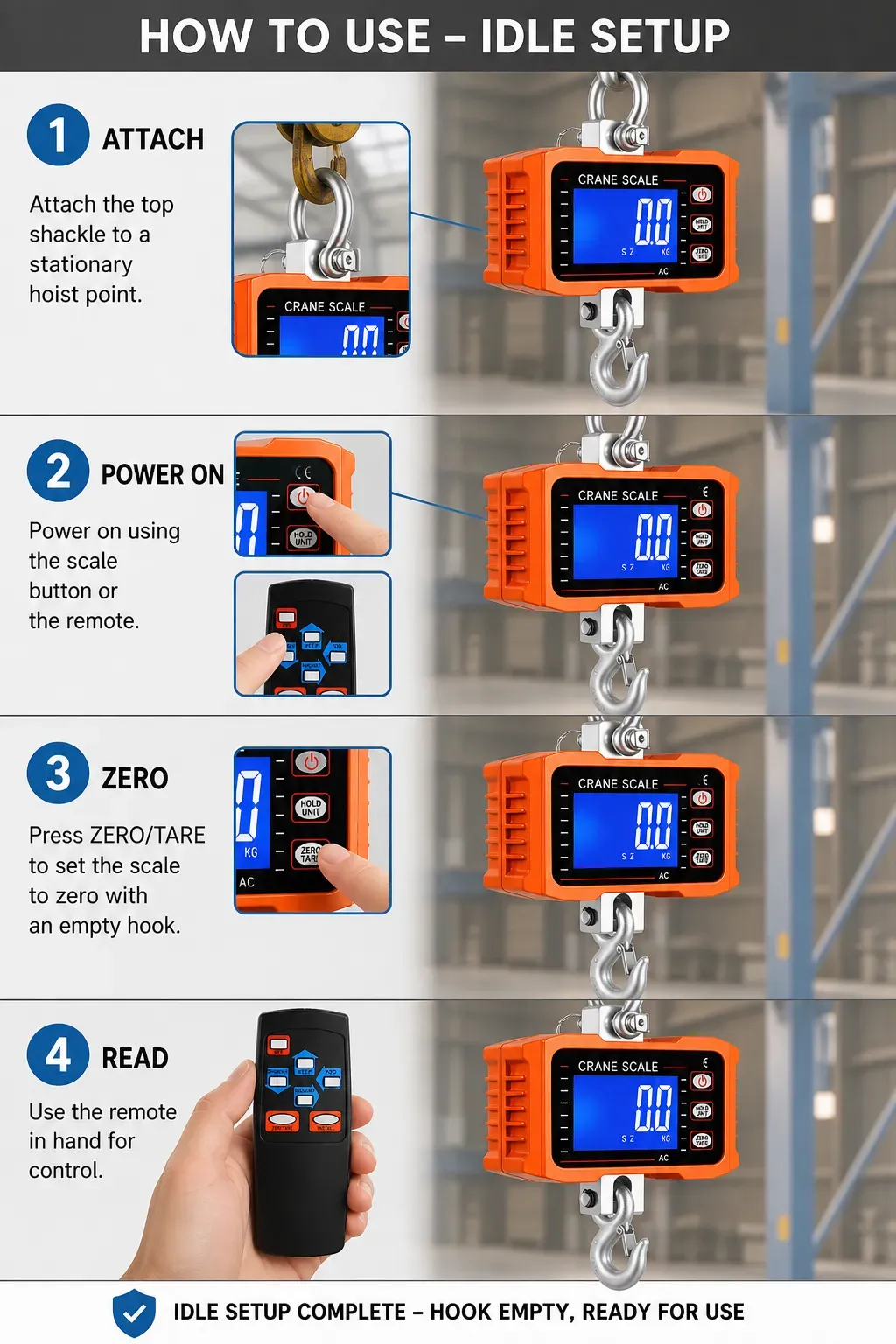
A heavy duty hanging scale is used to weigh suspended loads such as feed bags, engine parts, scrap metal and palletised goods accurately without moving them onto a platform scale. In UK warehouses, farms and workshops, it is the practical choice when loads are awkward, bulky or already being lifted by a hoist, chain block or workshop crane.
TL;DR: A heavy duty hanging scale is best for weighing suspended loads safely and efficiently in UK working environments. For most buyers, the right model combines suitable capacity, a clear digital display, durable hooks and shackles, straightforward controls and support for calibration and safe use under UK workplace guidance.
At Cranebusin, we see this demand most often from buyers who need dependable suspended-load weighing without overcomplicating the job. Based on our testing with common warehouse, agricultural and workshop loads, digital models are usually the most practical because they are quicker to read, easier to use and better suited to everyday handling than manual alternatives.
Key Takeaways
- A heavy duty hanging scale is designed to weigh suspended loads safely and accurately in working environments such as warehouses, farms and workshops.
- UK buyers should assess capacity, display visibility, power supply, hook and shackle quality, calibration support and intended working conditions before purchasing.
- Digital models are typically easier to read and faster to use than manual alternatives, especially where loads are handled at height or in dim indoor conditions.
- Safe use matters as much as accuracy: a scale must never be treated as the lifting system itself, and operators should follow relevant UK lifting and workplace safety requirements.
- For many everyday applications, a digital hanging crane scale offers a practical balance of a clear display, portability and a hook you can hang from a lifting point.
What is a heavy duty hanging scale?
A heavy duty hanging scale is a weighing device built to measure the mass of a load while it is suspended from a hook, shackle or lifting point. Unlike a bench or platform scale, it weighs the load while it hangs freely, so the operator can read the result once the load is stable.
In practical UK settings, this design is especially useful where goods are already being lifted by a hoist, gantry, chain block or workshop crane. As a result, the user can weigh the load during normal handling instead of lowering it, repositioning it and finding floor space for a separate scale.
Most buyers searching for a heavy duty hanging scale today are looking at digital models. In most cases, they are preferred because the display is easier to read from a distance and functions such as tare, hold and unit switching simplify day-to-day operation. This suits the workload common in British warehouses, agricultural stores and engineering units, where staff need equipment that works quickly without a steep learning curve.
Where are heavy duty hanging scales used in the UK?
The strongest buying case for a heavy duty hanging scale comes from environments where loads are awkward rather than simply heavy. Therefore, suspended-load weighing is common across several British sectors.
Are heavy duty hanging scales used in warehouses and distribution?
Yes. Warehouse teams use hanging scales for incoming goods checks, dispatch verification and weighing items that do not sit squarely on a platform. This is particularly helpful for bagged materials, boxed parts with protruding edges and goods already attached to lifting gear. In addition, a clear digital display is valuable where operators need to confirm weight quickly before storage or transport.
Are heavy duty hanging scales useful on farms and in agricultural buildings?
Yes. On farms, hanging scales are often used for feed sacks, fertiliser bags, produce containers and machinery parts. They suit buildings where floor conditions are dusty, damp or uneven and where a portable weighing solution is more practical than a fixed installation. For many agricultural users, simplicity matters more than advanced networking features, so the best equipment is often the kind that can be switched on and trusted immediately.
Can a heavy duty hanging scale be used in workshops and fabrication spaces?
Yes. Engineering and maintenance workshops use heavy duty hanging scales to weigh motors, gearboxes, metal stock and assembled components. Where loads are already supported by a workshop crane, the scale adds an efficient measurement step without interrupting the job. Consequently, this can help with load checks, stock control and confirming whether a component falls within safe manual handling or transport limits.
Are hanging scales suitable for scrap, recycling and material handling?
They often are. Operators handling cable, metal offcuts and compact bulky loads tend to prefer hanging scales because they cope better with irregular shapes. In these settings, durability and readable digits usually matter more than cosmetic finish. Over time, a scale that performs reliably in dusty or busy environments will generally return better value.
What makes a hanging scale heavy duty?
The phrase is often used loosely, so buyers should look beyond marketing labels. In practice, a true heavy duty hanging scale is defined by construction, rated capacity and suitability for regular use in working conditions rather than occasional domestic weighing.
Does a heavy duty hanging scale need a higher load capacity?
Yes. Capacity is the first marker. For many UK buyers, “heavy duty” starts well above parcel or retail scale ranges. A hanging crane scale is a common choice for industrial and agricultural use because it hangs the load and leaves the floor clear. For that reason, it is often a sensible fit for warehouses, farms and workshops.
Should a heavy duty hanging scale have robust metal housing and load-bearing parts?
Absolutely. The body, hook and shackle need to withstand repeated handling, not just static showroom conditions. Buyers should expect strong metal construction, secure connection points and components sized appropriately for the rated load. A compact scale can still be fit for serious work, provided the lifting interfaces are engineered properly.
Why is display visibility important on a heavy duty hanging scale?
Heavy duty use often means the load is not at eye level. The operator may be standing back for safety or working in dimmer buildings. Therefore, a bright digital display with large numerals is not a luxury feature; it is central to usability. If a reading cannot be seen quickly, productivity drops and the chance of error rises.
Why do simple controls matter on a hanging scale?
In real workplaces, people do not want to fight menus while a load is suspended. Straightforward controls for power, tare and unit selection keep operation predictable. This is particularly important for shared equipment used by more than one member of staff.
How do you choose the right heavy duty hanging scale?
Choosing well means matching the scale to the working pattern, not just the headline maximum weight. Buyers often focus too heavily on capacity and overlook the details that make the scale easier and safer to use every day.
How much capacity do you need in a heavy duty hanging scale?
Start with the heaviest item you expect to weigh, then leave a sensible operating margin. According to common UK workplace practice, equipment should be selected for the real task rather than pushed close to its limit on routine jobs. For many general users, a compact hanging crane scale covers routine checks without a floor platform.
Should you choose a digital heavy duty hanging scale?
In most cases, yes. Digital models are quicker to read, easier to verify from a short distance and generally more convenient for repeated use. Based on our testing, clear readouts and simple buttons make a noticeable difference where staff need to weigh loads efficiently during busy shifts.
What safety features should you check before buying?
Check the hook, shackle, housing and overall build quality carefully. In addition, make sure the scale is intended for suspended-load weighing in commercial or industrial settings. According to UK lifting and workplace safety expectations, the scale should be treated as weighing equipment within a properly managed lifting setup, not as a substitute for suitable lifting gear or safe lifting procedures.
Do calibration and after-sales support matter?
Yes, especially for regular business use. Reliable calibration support helps maintain confidence in readings over time, while accessible after-sales help reduces downtime if the unit is damaged or needs checking. For UK buyers, local support and clear documentation are usually worth more than marginal specification differences.
Does the working environment affect which scale you should buy?
Very much so. Dust, damp conditions, poor lighting and frequent movement all influence what will work best. As a result, a scale chosen for a clean dispatch area may not be the right choice for a livestock building, fabrication bay or recycling yard.
Is a heavy duty hanging scale accurate?
Yes, a good heavy duty hanging scale can be accurate enough for routine commercial, agricultural and workshop tasks, provided it is used within its rated capacity and under suitable conditions. Accuracy depends on the quality of the load cell, the stability of the suspended load and whether the scale is maintained and calibrated properly.
However, accuracy in day-to-day use is not just about the specification sheet. Swaying loads, poor attachment points and rushed readings can all affect results. Therefore, operators should allow the load to settle before taking a measurement and should follow the manufacturer’s instructions consistently.
Are heavy duty hanging scales safe to use?
They are safe to use when selected properly and used within a suitable lifting arrangement. However, a hanging scale should never be treated as the lifting system itself. According to UK guidelines around lifting operations and workplace risk management, the full setup matters: the hoist, chain, hook, attachment point, operator procedure and load stability all need to be considered together.
In practice, safe use means checking the scale before use, avoiding overload, keeping clear of suspended loads and making sure the reading is taken only when the load is stable. That is especially important in busy warehouses, farm buildings and engineering spaces where movement around the load is common.
What size heavy duty hanging scale is best for most buyers?
For many UK buyers, a heavy duty hanging scale with a readable display is the most practical starting point. It offers enough capacity for a wide range of warehouse, agricultural and workshop tasks while remaining portable, readable and cost-effective. In other words, it covers typical everyday loads without forcing buyers into larger, heavier and more expensive equipment than they actually need.
Frequently asked questions about heavy duty hanging scales
What is the difference between a hanging scale and a crane scale?
In everyday use, the terms are often used interchangeably. Generally, both refer to a scale that weighs a load while it is suspended. Some suppliers use “crane scale” for more industrial digital models, while “hanging scale” can be used more broadly.
Can a heavy duty hanging scale be used outdoors?
Some can, but it depends on the model and the conditions. Buyers should check whether the scale is suitable for damp, dusty or variable outdoor environments before relying on it for yard, farm or site use.
How often should a hanging scale be calibrated?
That depends on how often it is used, the working environment and internal quality requirements. In general, regular checks and periodic calibration are advisable for business use, especially where readings affect stock control, dispatch or compliance records.
Is a heavy duty hanging scale better than a platform scale?
Not in every case. A platform scale is often better for stable items that are easy to place down. However, a heavy duty hanging scale is usually better when loads are awkward, suspended already or difficult to position safely on a platform.
Ready to try Cranebusin?
Shop Now — £103.98