Hanging Crane Scale Explained: A UK Buyer's Guide
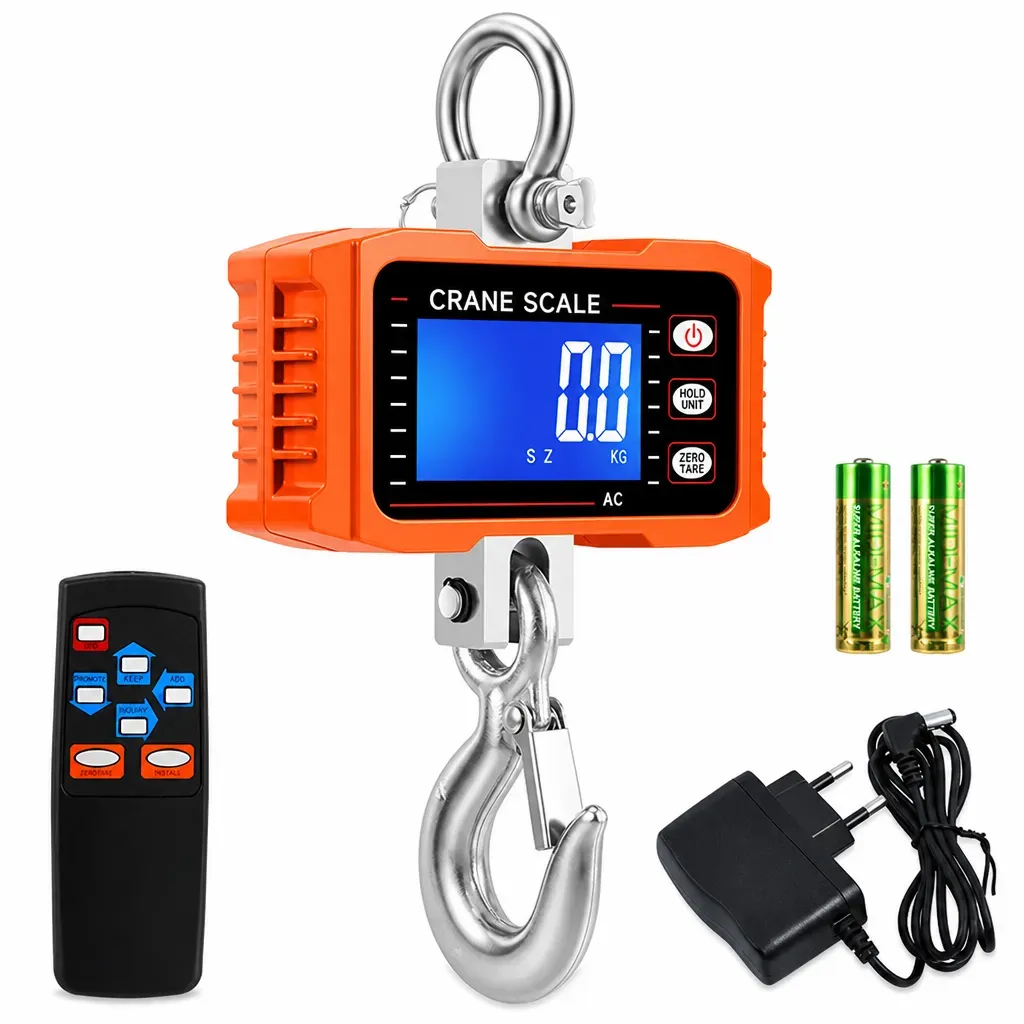
TL;DR: A hanging crane scale is a digital scale for a load that hangs from a lifting point. You read the weight on the display. For UK warehouses, farms and workshops, it is typically the right choice when you need quick, visible and repeatable weighing for awkward items, provided the scale is suitable for the environment, used within its rated capacity and supported by appropriate certification for the job.
Key Takeaways
- A hanging crane scale is a practical fit for UK warehouses, farms and workshops, where the load hangs from a hook and you read the display from the floor.
- The right model should offer clear display visibility, straightforward controls, durable construction and certification that supports safe commercial use in the UK.
- Buying on headline capacity alone is a mistake; hook size, shackle quality, readability, battery life and operating environment all affect day-to-day performance.
- For most British businesses, affordability matters, but reliability and safe operation matter more when staff are weighing heavy loads repeatedly.
- A well-chosen digital crane scale can speed up dispatch, reduce manual handling and improve stock accuracy when used correctly.
A hanging crane scale is used to weigh a load while it hangs, and it is commonly chosen by UK buyers who need a practical way to weigh awkward or palletised items without moving them onto a floor scale. In short, it suits workplaces that need fast, visible and repeatable readings during normal lifting and handling tasks.
When a pallet, feed bag, engine part or fabricated component is hanging in mid-air, guesswork is expensive. A few kilograms either way can affect courier charges, stock records, material control and, in some settings, whether a lift is handled confidently at all. Therefore, the hanging crane scale has become such a useful tool across British workplaces: it gives a fast weight reading on suspended loads without forcing staff to wrestle items onto a floor platform.
At Cranebusin, we see why this matters in real working environments. UK warehouses need quick checks before dispatch. Farms need a practical way to weigh feed, produce or equipment. Workshops need clear, repeatable readings without slowing down the job. Based on our testing of everyday-use digital hanging scales in British work settings, buyers usually value readability, straightforward controls and dependable build quality more than extra features they rarely use.
This guide explains what a hanging crane scale is, where it fits, how to judge build quality, what UK buyers should look for and which mistakes are worth avoiding before purchase.
What is a hanging crane scale?
A hanging crane scale is a suspended-load weighing device. The load hangs from the hook, and you read the display in kilograms or pounds. It typically hangs from a lifting point and supports a lower hook or shackle that carries the load being weighed. The internal load cell measures force and converts it into a digital weight reading shown on the display.
In practical terms, it sits between lightweight hanging scales and heavy industrial crane scales built for several tonnes. For many UK users, a hanging crane scale is a useful middle ground. It covers everyday suspended loads without the floor space of a platform scale.
Most digital models include standard functions such as:
- Weight display in kilograms and sometimes pounds
- Tare function for containers or slings
- Hold function to retain a reading
- Remote control or simple button operation
- Rechargeable battery or long-life internal power supply
- Overload warning
Moreover, the best units are built for quick reading at a distance, which is especially useful in busy warehouses and workshops where the operator is rarely standing with their face close to the scale.
What is a hanging crane scale used for?
A hanging crane scale covers common lifting and weighing tasks without a floor platform. Plenty of businesses need something compact, readable and dependable for regular daily use.
Can a hanging crane scale be used in warehouses and distribution?
Yes. In warehouse settings, a hanging crane scale is often used to verify incoming goods, spot-check outbound loads and reduce discrepancies before dispatch. It can also help teams weigh awkward items that are difficult to place on a bench or platform scale.
Is a hanging crane scale suitable for farms and agricultural buildings?
Yes, provided the unit is robust enough for the environment. On farms, suspended weighing is useful for produce sacks, feed containers, mechanical parts and general stores. Conditions are not always clean or controlled, so straightforward operation and a durable casing matter more than unnecessary features.
Can workshops and fabrication spaces use a hanging crane scale?
Yes. Engineering and fabrication workshops often handle metal sections, tools, assemblies and components that need weighing during repair, manufacture or shipping preparation. As a result, a clear digital readout saves time and reduces repeated handling.
Is it useful for waste, recycling and materials handling?
Where material value depends on weight, suspended weighing gives a fast check before transfer or processing. While the scale does not replace every weighing system, it can be a very effective operational tool.
Why choose a hanging crane scale?
A good buying decision starts with the operational result you want. Most buyers are trying to improve one or more of the following.
Does a hanging crane scale make awkward loads easier to weigh?
Yes. Bulky or uneven items are often difficult to position on a platform. Suspending the load can be far more efficient, provided the lifting setup is suitable and safe.
Can it improve stock and dispatch accuracy?
Yes. Weight errors affect quoting, courier costs and inventory records. Therefore, a visible digital reading helps staff make quicker decisions with less manual calculation.
Can it reduce unnecessary handling?
Often, yes. Every extra lift, shift or repositioning step adds time and risk. A crane scale allows the load to be weighed during a normal lifting process, which can simplify the workflow.
Is it easier to read in mixed working environments?
Yes, if the display is bright and well-sized. In a workshop or barn, the operator may be dealing with dust, noise, gloves and poor light. Consequently, an uncluttered display and simple controls make a real difference in those conditions.
How accurate does a hanging crane scale need to be?
Accuracy should match the job. Not every buyer needs laboratory-level precision, but every buyer does need a scale that gives repeatable readings within the intended use case. If you are checking dispatch weights, managing stock or selling by weight, the tolerance and calibration standard matter much more than if you are carrying out rough internal checks only.
According to UK guidance and workplace data, handling heavy items remains a practical safety concern. The Health and Safety Executive reports that 17% of non-fatal workplace injuries in Great Britain in 2023/24 were caused by handling, lifting or carrying injuries, based on Labour Force Survey data.[1] A crane scale does not remove lifting risk by itself; however, where suspended weighing reduces repeated manual repositioning, it can support a safer and more efficient process when used properly within a suitable lifting system.
Buyers should separate two questions:
- Is the reading accurate enough for the commercial or operational decision being made?
- Is the scale certified and maintained appropriately for that type of use?
For many businesses, consistency is as important as the last decimal place. In other words, a dependable reading that operators can trust every day is usually more valuable than extra specification that never affects the job.
Source: Health and Safety Executive, Work-related ill health and workplace injuries in Great Britain, 2024 update. Manual handling remains one of the most common causes of non-fatal workplace injury in Britain.[1]
What should you look for when buying a hanging crane scale?
Choosing the right model means looking at the display, the hook and how you hang the load. Based on our testing, the most useful differences usually appear in visibility, build quality and ease of everyday operation rather than in headline specifications alone.
How important is display visibility?
It is very important. A bright, clear display is essential when operators need to read weights from a short distance in warehouses, workshops or agricultural buildings. Therefore, large digits and good contrast should be near the top of your checklist.
Do hook and shackle quality matter?
Yes. The weighing mechanism matters, but so do the load-bearing components. Buyers should check the quality, finish and suitability of hooks, shackles and attachment points, especially where the scale will be used frequently.
Should battery life and charging be a priority?
For most workplaces, yes. A scale that is easy to recharge and lasts through normal shifts is usually more practical than one with awkward charging routines or unreliable power performance.
Is simple operation better than extra features?
In many cases, yes. Straightforward buttons, stable readings, tare and hold functions, and an easy-to-understand display are often more valuable than feature lists that add little to daily work.
Do UK buyers need certification for a hanging crane scale?
That depends on how the scale will be used. If the reading supports commercial transactions or regulated processes, buyers should confirm whether the model and its certification are suitable for that purpose in the UK. Therefore, it is worth checking trade-use requirements, calibration expectations and any site-specific compliance standards before buying.
What are the common mistakes when buying a hanging crane scale?
Many buying mistakes come from treating every hanging scale as the same. In practice, they are not. A cheaper unit may still be fine for light internal use, but not every model is equally suitable for frequent commercial work.
Is buying on capacity alone a mistake?
Yes. Capacity on its own does not tell you how readable or practical the scale will be. It does not tell you how readable, durable or practical the scale will be in daily use.
Do buyers overlook the working environment?
Often, yes. Dust, moisture, cold buildings and rough handling all affect suitability. Consequently, environment should be part of the buying decision from the start.
Can poor readability slow the job down?
Absolutely. If operators struggle to read the display quickly, the weighing process becomes slower and less dependable, particularly in busy shared spaces.
Is it a problem to ignore certification and calibration needs?
Yes, especially for businesses using weights in commercial decisions. Buyers should be clear about whether they need a scale simply for internal checks or for formal trade-related use.
Is a hanging crane scale right for your business?
A hanging crane scale is often the right fit when you need a faster way to weigh suspended or awkward items in a UK working environment. It is especially useful where speed, readability and reduced handling matter more than ultra-high capacity.
For many British warehouses, farms and workshops, this capacity offers a sensible balance of price, size and practical performance. However, the right buying decision still depends on your lifting arrangement, frequency of use, working conditions and any certification requirements attached to the readings.
At Cranebusin, we recommend judging a scale by how well it fits the real task: not just the stated capacity, but also the visibility, controls, hardware quality and suitability for the way your team actually works.
Ready to try Cranebusin?
Shop Now — £103.98